Source forged free cutting round steel for machinery, tools, and hardware
Find 30 listings for forged free cutting round steel suitable for machinery parts, tool steel bars, and hardware applications. Compare specifications including material grades, tolerances, and surface treatments from verified suppliers.
Key considerations
Products List




Comprehensive Sourcing Guide
Strategic Sourcing Guide for Forged Free Cutting Round Steel
The procurement of forged free cutting round steel represents a critical decision point for manufacturers in the machinery, automotive, and tooling sectors. This specific material class combines the structural integrity of forging with the machinability of free-cutting alloys, offering a balanced solution for high-volume production of precision components. Sourcing this material requires a disciplined approach that moves beyond simple price comparison to a rigorous evaluation of metallurgical properties, manufacturing processes, and supply chain reliability. Buyers must navigate a complex landscape where the distinction between standard carbon steel and specialized free-cutting grades determines the success of downstream machining operations. The following guide outlines the essential factors for evaluating suppliers and specifications for forged free cutting round steel, ensuring that procurement decisions are grounded in verified technical data and industry standards.
Technical Specifications and Metallurgical Profiles
Understanding the precise technical specifications of forged free cutting round steel is the foundational step in any sourcing strategy. The core material is defined by its composition and the forging process used to achieve its final form. In the observed market, the base material is frequently identified as carbon steel, with specific grades ranging from non-alloy variants to specialized tool steels. The "free cutting" attribute implies the presence of specific additives, such as sulfur or lead, which facilitate chip breaking and reduce tool wear during machining, although the exact chemical composition must be verified against the specific application requirements.
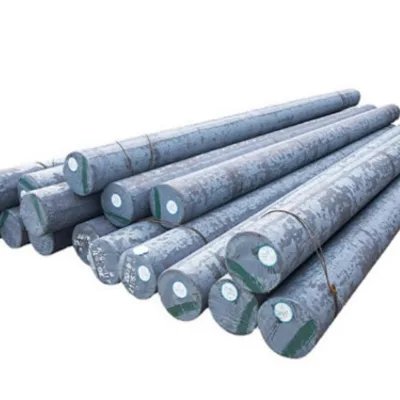
The physical form of the product is typically a round bar, with dimensions that can vary significantly based on the supplier's capabilities. Observed specifications indicate a diameter range extending from 6mm up to 400mm, with some specialized suppliers offering larger industrial sizes up to 6000mm in length or diameter depending on the specific product standard. The shape is consistently round, which is optimal for turning operations and the production of shafts, bolts, and fasteners.
Tolerance is a critical parameter for forged steel. While standard machining tolerances might vary, high-precision forged bars often adhere to strict dimensional limits. Data indicates that forging tolerances can be as tight as +/-0.1mm for specific high-precision applications, while general commercial grades may allow for a tolerance of +/-0.5mm or a percentage-based deviation of ±1%. Buyers must explicitly define the required tolerance band in their purchase orders, as the cost of machining a part with a loose tolerance is often lower than the cost of correcting a part that exceeds the allowable limit. The surface finish is another key specification; the material is often supplied with a polished or passivated surface to remove scale and improve machinability, though the final finish may depend on the specific heat treatment applied.
Compliance, Certification, and Standard Verification
Compliance with international standards is non-negotiable for industrial procurement of forged steel. The material must adhere to recognized standards that govern its chemical composition, mechanical properties, and dimensional accuracy. The market data highlights adherence to a broad spectrum of standards, including ASTM, AISI, DIN, GB, JIS, and BS. These standards provide the framework for verifying that the steel meets the necessary performance criteria for its intended application. For instance, ASTM standards are prevalent in North American markets, while GB and JIS are common in Asian supply chains.
Certification serves as the primary evidence of a supplier's quality management systems. A high-confidence observation in the current market is the prevalence of ISO 9001 certification, often accompanied by SGS verification. This certification indicates that the supplier operates under a documented quality management system that ensures consistency in production. Additionally, some suppliers may hold CE certification, which is essential for products intended for the European market. It is crucial for buyers to request valid, up-to-date certification documents directly from the supplier rather than relying on general marketing claims.
The standard verification process should also include checking the specific product standard codes. For example, some suppliers list standards such as "European Standard" or "Chinese Standard" alongside specific numerical codes like ID300mm to ID6000mm. Buyers must ensure that the standard cited on the mill test certificate matches the standard required by their engineering drawings. Discrepancies between the ordered standard and the delivered material can lead to rejection of the batch and significant production delays. Furthermore, the origin of the steel, such as Jiangsu or Shandong in China, can influence the applicable regional standards and the specific grade availability, making it essential to verify the place of origin against the required standard.
Cost Drivers and Economic Factors
The pricing of forged free cutting round steel is influenced by a complex interplay of material costs, processing complexity, and market dynamics. The base cost is driven by the price of raw steel scrap and the specific alloying elements required for free-cutting properties. Variations in the steel grade, such as moving from standard carbon steel to specialized tool steel or high-strength variants, will significantly impact the unit price. The observed price range in the market is vast, spanning from $0.47 to $15,000, reflecting the difference between small-diameter bars and large, high-precision industrial components.
Processing costs are another major driver. The forging process itself, particularly when combined with heat treatment methods like normalizing or quenching, adds value but also cost. Suppliers offering custom forgings with tight tolerances of +/-0.1mm will command a premium over those supplying standard off-the-shelf bars. The surface treatment, whether polishing or passivation, also contributes to the final cost. Additionally, the customization level plays a role; products manufactured "according to drawings" or with specific custom models often incur higher setup and engineering fees compared to standard catalog items.
Minimum Order Quantities (MOQ) and lead times are critical economic factors. The observed MOQ range is broad, from 1 unit to 100 units, allowing for flexibility in procurement strategies. Small buyers can source single units for prototyping, while large manufacturers may negotiate bulk rates for orders exceeding 100 units. Lead times typically range from 8 to 14 days for standard items, but custom orders may require extended periods. Buyers should factor in these lead times when planning production schedules to avoid bottlenecks. Packaging, often specified as plywood, wood cases, or standard export packing, also adds to the overall cost, particularly for international shipments where robust packaging is required to prevent damage during transit.
Typical Applications and Performance Requirements
Forged free cutting round steel is predominantly utilized in applications requiring high precision and efficient machining. The primary application areas include machinery parts, hardware components, and tooling. The material's ability to be machined quickly and accurately makes it ideal for the mass production of bolts, nuts, shafts, and gears. In the machinery sector, these bars are often forged into components that must withstand high stress while maintaining tight dimensional tolerances.
The specific use cases for this material are diverse, ranging from high-strength steel plates to wear-resistant components and mold steel. The "free cutting" characteristic is particularly valuable in the production of free-cutting steel parts where tool life and surface finish are critical. For example, in the automotive industry, free-cutting steel is used for manufacturing engine components and transmission parts that require high strength and excellent machinability. Similarly, in the tooling industry, die steel bars are used to create molds and dies that must endure repeated cycles of high pressure and temperature.
The performance requirements for these applications are stringent. The material must exhibit high strength, wear resistance, and dimensional stability. The forging process enhances the grain structure of the steel, providing superior mechanical properties compared to cast or rolled alternatives. This makes forged free cutting round steel suitable for critical applications where failure is not an option. Buyers must ensure that the selected material grade matches the specific performance demands of their application, considering factors such as load-bearing capacity, fatigue resistance, and environmental conditions.
Supplier Evaluation and Quality Control Protocols
Evaluating suppliers for forged free cutting round steel requires a multi-faceted approach that assesses technical capability, quality control systems, and operational reliability. The first step is to verify the supplier's manufacturing capabilities, including their forging equipment, heat treatment facilities, and machining precision. Suppliers should be able to demonstrate their ability to produce bars with the required tolerances, such as +/-0.1mm, and to apply specific surface treatments like polishing or passivation.
Quality control is paramount. Buyers should request detailed quality control reports, including mill test certificates that verify the chemical composition and mechanical properties of the steel. The supplier's adherence to ISO 9001 and other relevant certifications should be confirmed through independent audits or third-party verification. Additionally, the supplier's ability to provide custom manufacturing according to specific drawings is a key indicator of their flexibility and technical competence.
The production process should be transparent. Suppliers should be willing to share information about their sourcing of raw materials, such as stainless steel scrap or carbon steel, and their methods for ensuring consistency. The location of the manufacturing facility, such as Jiangyin, Jiangsu, or Shandong, China, can also be a factor in logistics and communication. Buyers should assess the supplier's lead time reliability, as delays in delivery can disrupt production schedules. Finally, the packaging and shipping methods should be evaluated to ensure that the steel arrives in pristine condition, protected by appropriate wooden or plywood cases.
Long-Term Procurement and Supply Chain Resilience
Establishing a long-term procurement strategy for forged free cutting round steel involves more than just securing a single transaction; it requires building a resilient supply chain capable of adapting to market fluctuations and changing demands. Buyers should focus on developing relationships with suppliers who demonstrate a commitment to continuous improvement and quality assurance. This includes regular performance reviews, feedback mechanisms, and collaborative efforts to optimize the supply chain.
Supply chain resilience is critical in the face of global disruptions. Buyers should diversify their supplier base to mitigate the risk of single-point failures. This might involve sourcing from multiple regions or maintaining a buffer stock of critical materials. The ability of suppliers to scale production up or down based on demand is also a key consideration. Suppliers with flexible MOQs and the capacity to handle custom orders can provide the agility needed to respond to market changes.
Sustainability and ethical sourcing are increasingly important factors in long-term procurement. Buyers should inquire about the supplier's environmental practices, including waste management and energy efficiency in the forging process. Certifications such as ISO 9001 often include provisions for environmental management, providing a framework for sustainable operations. By prioritizing suppliers who align with these values, buyers can ensure that their supply chain is not only efficient but also responsible and future-proof.
In conclusion, sourcing forged free cutting round steel requires a comprehensive understanding of technical specifications, compliance requirements, cost drivers, and supplier capabilities. By adhering to the guidelines outlined in this guide, buyers can make informed decisions that ensure the quality, reliability, and cost-effectiveness of their procurement. The focus should always be on verified data and transparent communication, avoiding assumptions and relying on concrete evidence to drive the sourcing process.
FAQs
What certifications do forged free cutting round steel suppliers typically hold?
Suppliers typically hold ISO 9001 certification, often verified by SGS. Some vendors also provide CE certification for European market compliance. Buyers should request valid documents directly to ensure quality management systems are active.
Which standards govern the production of forged free cutting round steel?
Production adheres to multiple international standards including ASTM, AISI, DIN, GB, JIS, and BS. Specific product standards may also reference European or Chinese standards depending on the origin and intended application of the steel bars.
Can suppliers customize forged free cutting round steel according to drawings?
Yes, customization is available for products manufactured according to specific customer drawings. Suppliers offer custom models and can produce bars with specific dimensions ranging from 6mm to 400mm or larger based on requirements.
What is the typical lead time for delivering forged free cutting round steel?
The standard delivery time ranges from 8 to 14 days for most orders. Custom orders or those requiring specific heat treatments like quenching may require extended periods depending on the manufacturer's current capacity and location.
How is the forging tolerance defined for high-precision forged steel bars?
Forging tolerance can be as tight as +/-0.1mm for high-precision applications. General commercial grades may allow for a tolerance of +/-0.5mm or a percentage-based deviation of ±1% depending on the specific product specification.
What packaging methods are used for shipping forged free cutting round steel?
Products are commonly packed in plywood cases, wooden cases, or standard export packing. This robust packaging ensures the steel bars arrive in pristine condition and are protected from damage during international transit.